The Resonance Dome
Speculative Design — Technoculture & Society
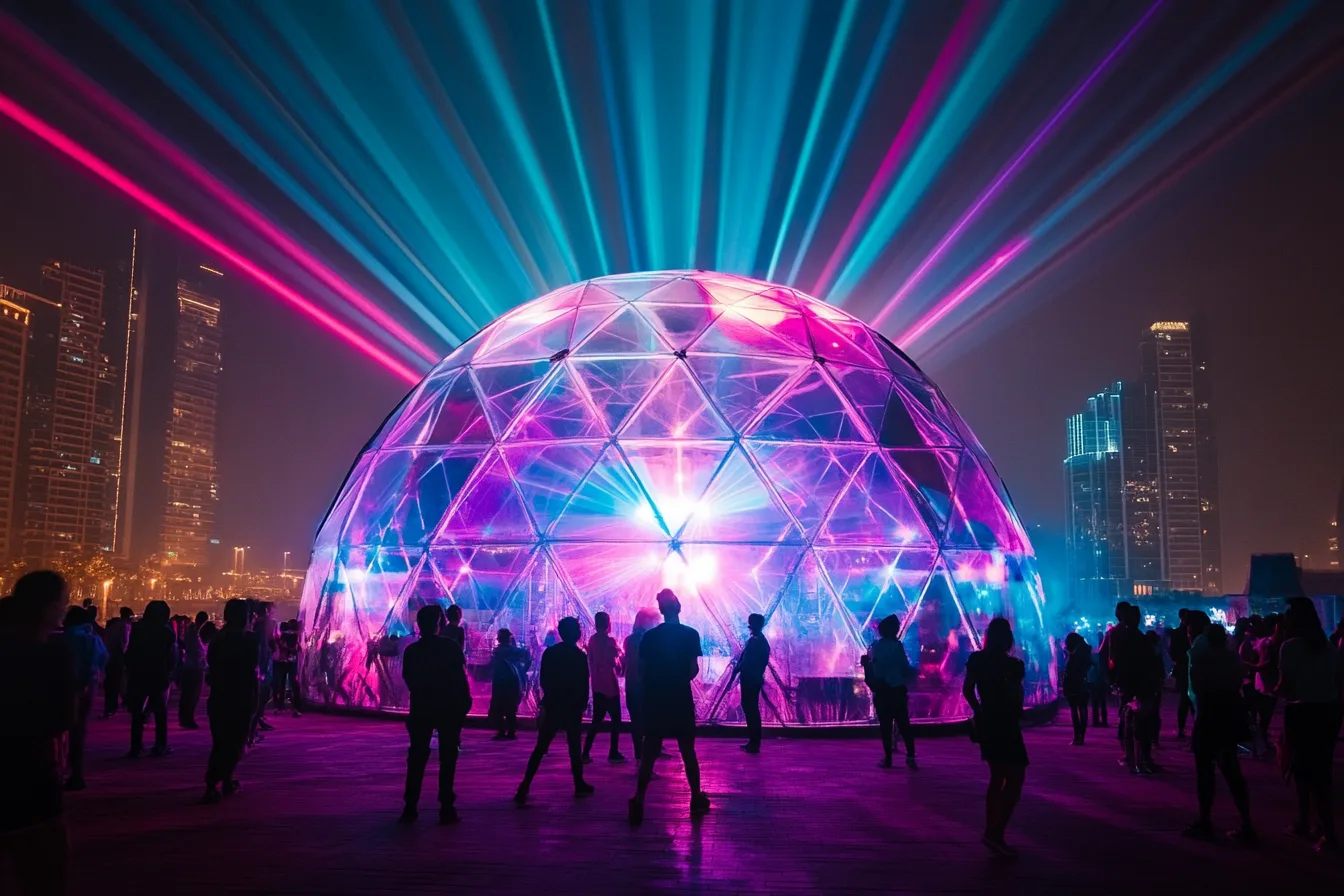
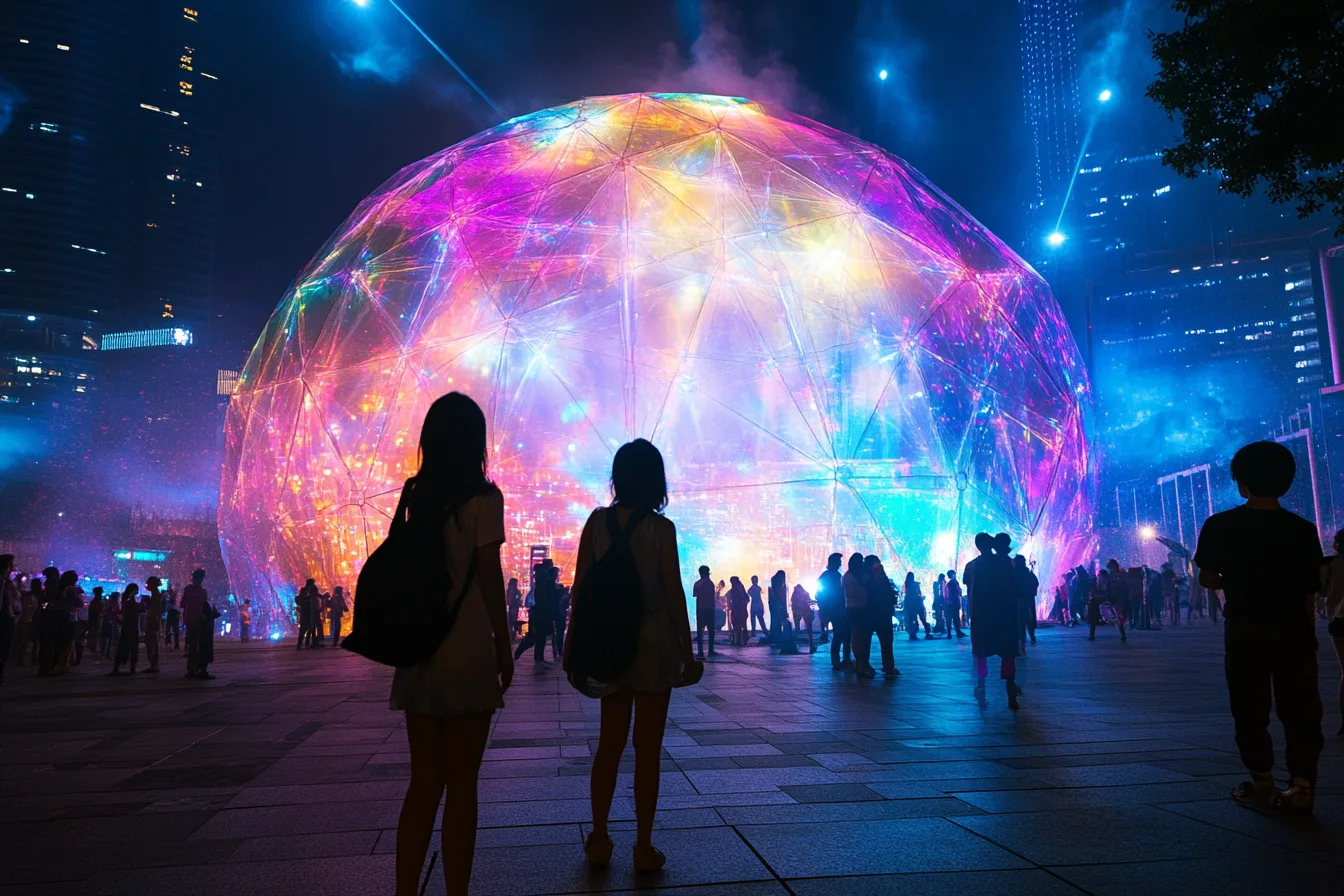
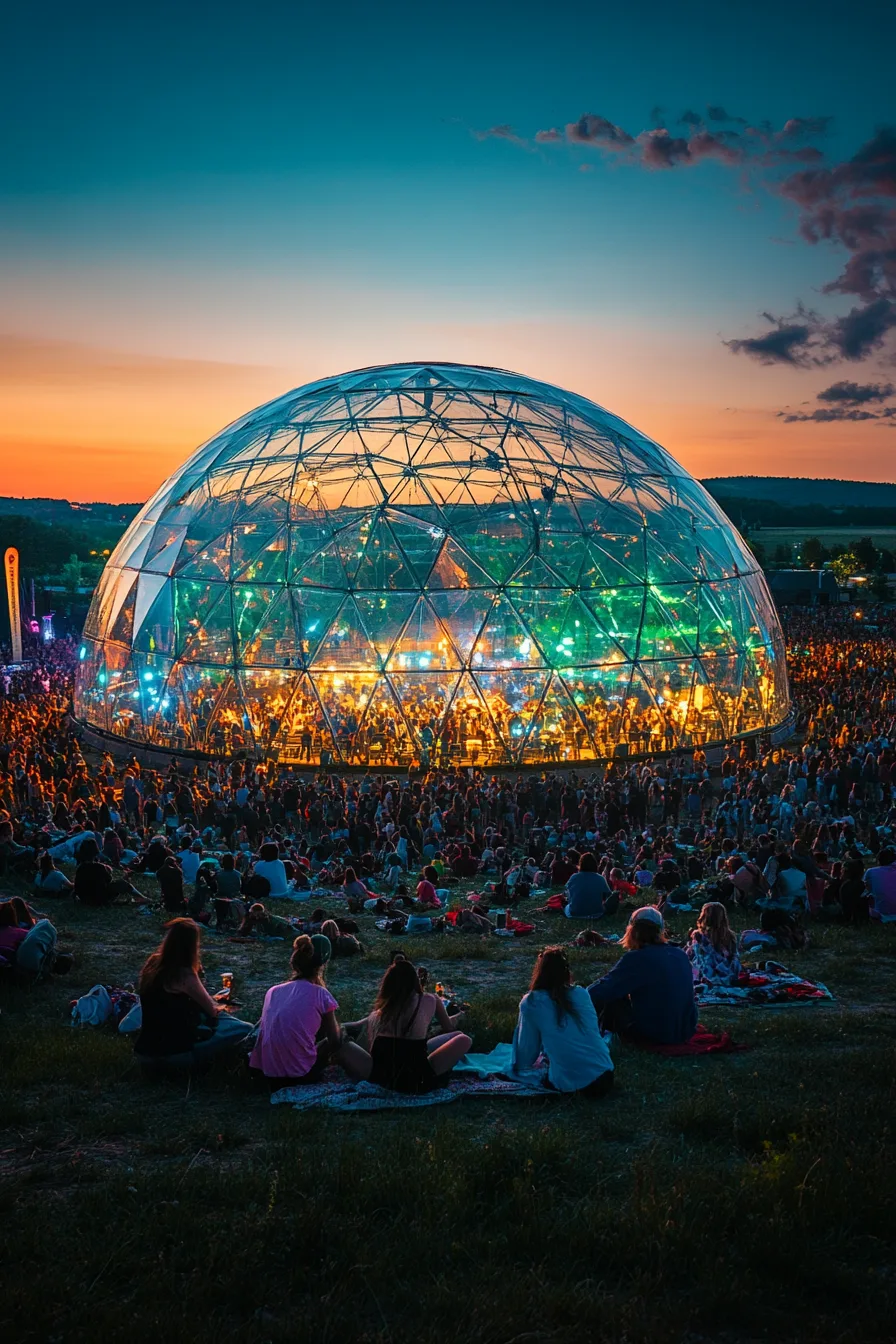
In a future where neural implants have become ubiquitous, society suffers from increased isolation, emotional flatlining, and the absence of real human connection. The Resonance Dome is a speculative mobile venue — a giant geodesic structure made from transparent Nitinol — where live music, 3D spatial audio, and chemical neural suppression combine to create a space where people can reconnect. Operated by 'The Resonants' — modern musicians and spiritual healers — the Dome travels between cities offering an experience designed to awaken emotion, presence, and connection.
The World of 2125
By 2125, neural implants shape day-to-day interaction. People spend more time interfacing with AI than with loved ones. The need for a counter to this unhealthy lifestyle becomes clear. Society suffers from increased isolation, dependency on invasive technologies, and an absence of real emotional or physical intimacy.
A condition called 'Emotional Flatlining Syndrome' has been declared a public health emergency. The timeline traces the evolution from today's brain-computer interfaces (2025) through neural implant ubiquity, emotional wellness crises, and the emergence of 'Resonance Domes' as protected spaces where authentic human connection can be restored.
Research suggests that as societies become increasingly technologised, traditional communal rituals like live music diminish, contributing to a deep subconscious yearning for shared emotional experiences.
Meet The Resonants
Modern musicians and spiritual healers who travel the world crafting immersive, multisensory experiences. Merging advanced audio technology with live instrumentation, they build acoustic environments designed to awaken emotion, presence, and connection.
In a world increasingly fragmented by isolation and neural overload, Resonants create spaces where people can feel together again — physically, emotionally, and spiritually. They are not performers in the traditional sense; they are emotional architects who use sound as their primary material.
The target demographic — 'Tech Fatigued Urban Citizens' — spans three age groups: Young Adults, Middle-Aged Adults, and Elders. All are fatigued by constant bio-tracking and synthetic stimulation, craving real presence. The experience is ticketed, but also provides a free experience for those outside the dome.
The Dome
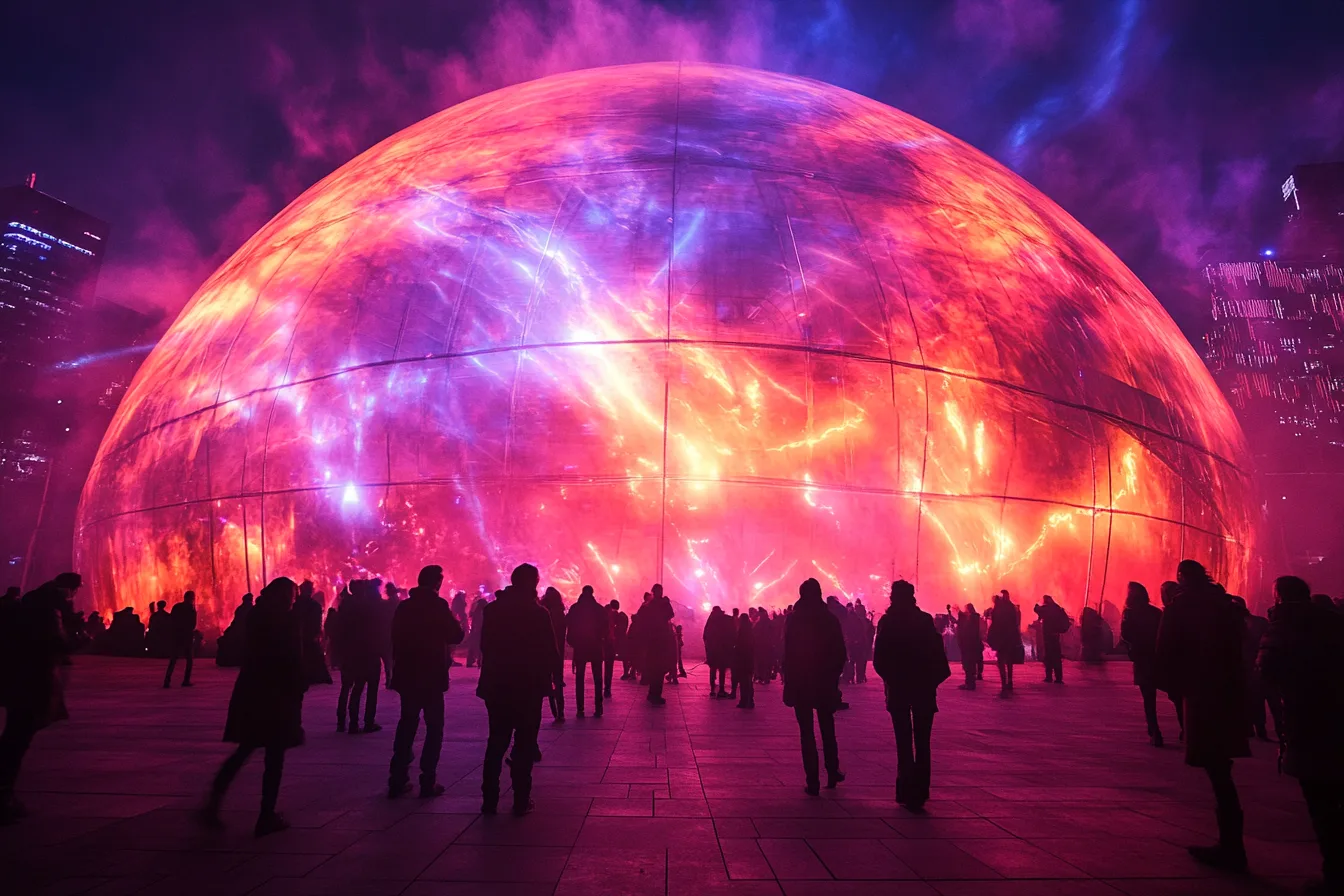
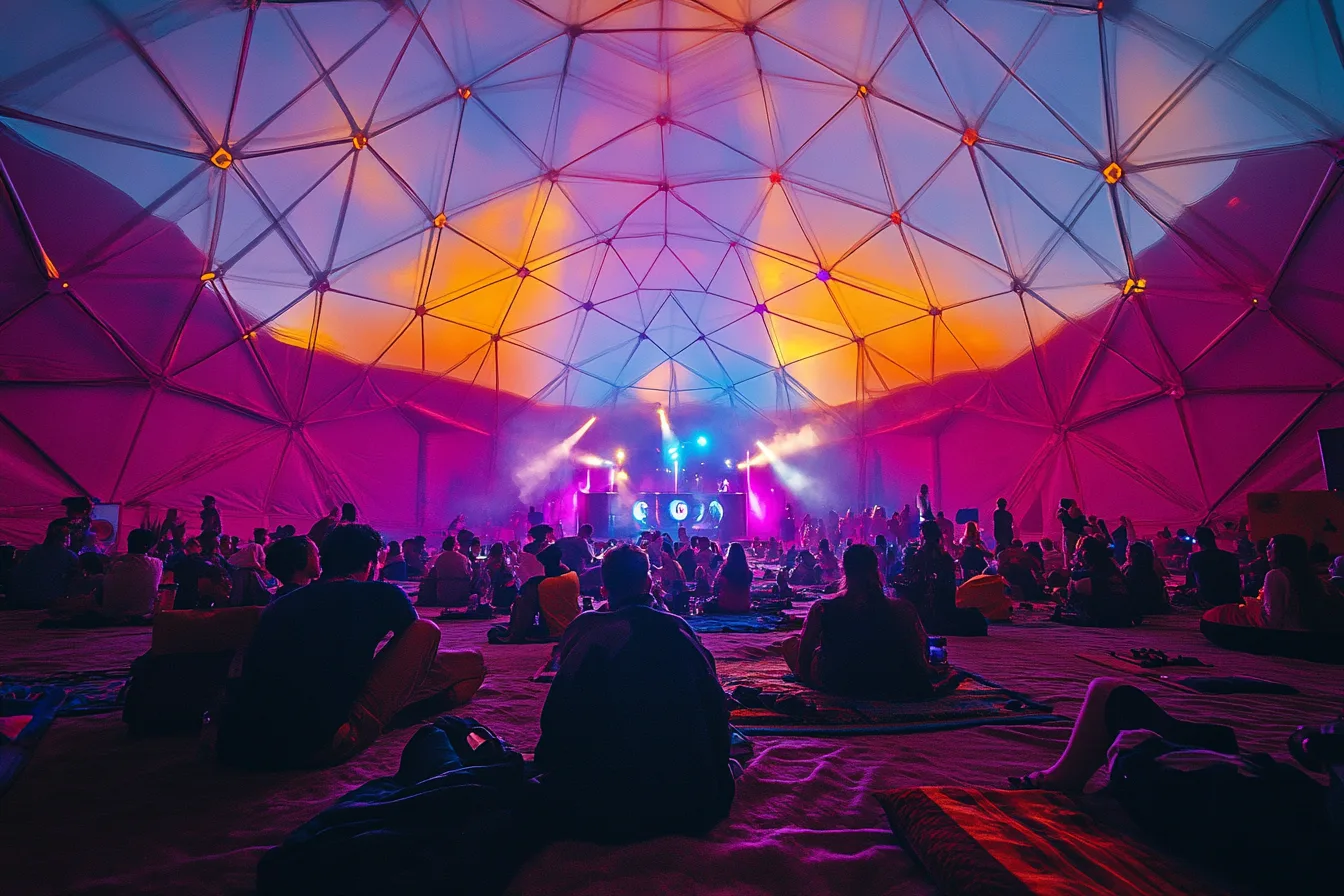
The Resonance Dome is a mobile venue that uses state-of-the-art construction techniques to create a space for an audio-visual experience like no other. The exterior material is made of transparent Nitinol — a shape-memory titanium alloy that was speculated to evolve into a transparent, deployable building material by 2125.
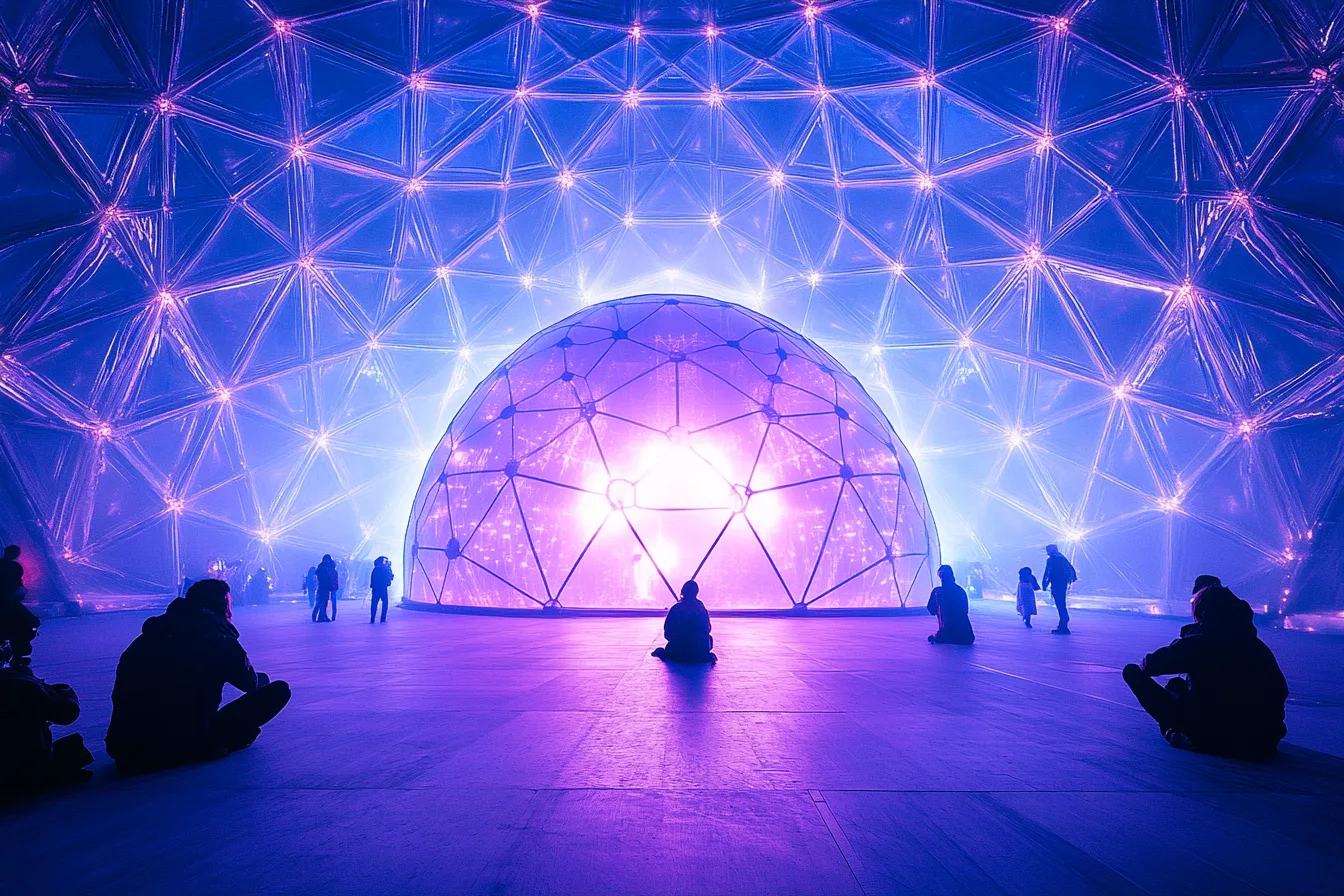
The dome features speakers that record live acts and project 3D audio around the listener, advanced receptive conductors that react to sound by illuminating the geodesic panels, and an approved EDA chemical dispersed to suppress neural interference — creating a 'tech disarm zone' upon entry.
The initial design was inspired by how tents remain upright and can be created in a short time, combined with the remarkable properties of Nitinol reacting to water. The speculation: what if transparent Nitinol could suddenly create a desired form when touched by water?
The Experience
The user journey through the Resonance Dome unfolds across nine carefully designed stages:
1. Arrival — approach the dome, the only structure without neural beacons. Dome architecture visibly disrupts the ambient neural signal field. 2. Tech Disarm Zone — enter through a tech-neutral attack where the neural interface deactivates automatically. 3. Acclimatisation Tunnel — ambient tones and faint breath-like vibrations stimulate somatic awareness. 4. First Entry — soft dim light, gradual spatial reveal evokes timidity. 5. Resonance Awakens — live sound begins. Heartbeat bass, distant cello, natural reverb. Music synced to sound. 6. Performer Reveal — no screens, no neural effects. Just live, unfiltered human presence. 7. Communal Climax — audience synchronises. Singing, movement, gasps, tears. Dome's bio-feedback lights illuminate the space. 8. Exit Through Stillness — quiet return through the exit tunnel. No talking, just breath and reflection. 9. Post-Experience City Reentry — neural systems reactivate, but users report feeling 'lighter' or 'more human' for days.
Impact & Ethics
The project explored consequences across five dimensions — ethical, societal, emotional health, technological ethics, and environmental.
Positive effects include respecting user autonomy by allowing total disengagement from neural tech, reawakening shared cultural rituals like communal music, helping people recover from Emotional Flatlining Syndrome, and using off-grid sound systems with sustainable smart materials.
Potential risks include black market tickets making the experience elitist, temporary joy making reentry into neural society feel more alienating, overdependence where some may chase Dome experiences like a drug, and the possibility of being outlawed in cities if it disrupts neural data commerce.
Design responsibility reflections centred on emotional vulnerability — the Dome is designed not to exploit that vulnerability but to offer safe, grounded reconnection. Inclusivity was intentional: acoustic and bodily stimuli rather than high-tech visuals make it accessible to users with sensory impairments or neurodivergence. The speculative design serves as cultural critique — asking what it means to feel, to be present, to be human in a hyper-connected future.
Personal Connection
This speculative design draws directly from Oisin's personal development as a professional musician. From 2014 to 2025, his arsenal of equipment grew as his needs evolved — from acoustic-only performances to advanced PA systems and additional equipment.
Performing in bars created moments of magic when interacting with the crowd — dancing and singing together, extended eye contact, sometimes moments of true movement known as Kama Muta (moved by love). The question that drove this project: how could this be created on a more consistent basis? How could audience participation in the right environment be the key?
The idea of 3D audio that surrounds the listener and reacts to movement in real time became the bridge between lived musical experience and speculative future design. The Resonance Dome is where instinct meets imagination — a vision for what live music could become when freed from the constraints of today's technology.